




Why Creative Sandbox Games Are the Natural Hobby of the Tabletop Gamer
Fans of tabletop RPGs have always shared a strong bond with creative sandbox games. If you visit a tabletop community long enough, you will very soon discover that a good number of players who enjoy dice rolling, character building, and world crafting, also spend

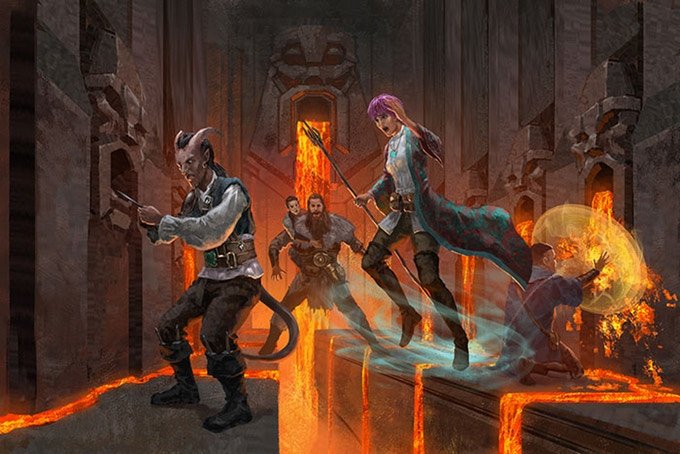
Fantasy Live Role Playing Characters, Hardenstein 2014
many hours playing games like Minecraft, Terraria, Valheim, or No Man’s Sky. The fact that these groups overlap is no accident. These activities tap into the same creative instincts.
Tabletop gaming and sandbox games seem to be two sides of the same coin, inasmuch as they are built on the idea of freedom, imagination, collaboration, and the thrill that comes from creating unexpected stories. They are a great source of entertainment for players who want to create their own adventures instead of just following the itinerary that somebody else planned for them. To a tabletop gamer, creative sandbox games are not so much a different pastime as much as a continuation of the same way of thinking.
Freedom Is the Real Appeal
The main advantage of tabletop RPGs is the freedom that they give. In a campaign players do not have to be limited to simply pressing the right button or selecting the options from a limited menu. They can fight enemies while physically negotiating them, come up with weird plans, completely ignore the main quest, or even wreak havoc by setting fire to the tavern. This kind of agency is hardly seen even in entertainment, that is why we still love tabletop gaming that much.
Sandbox games similarly give you total control over your experience and don’t limit you to only one way to play the story. Rather, they offer you an opportunity to immerse yourself in a virtual environment brimming with possibilities and assets. The question of what matters most to you is entirely yours. Would you like to construct, undertake a quest, endure battle, innovate, or simply roam? Just for tabletop gamers, this is very familiar, and the main pleasure lies in the question, “What if we tried this?”
World-Building Is a Part of the Core Nature of Tabletop Gaming
The Dungeon Masters (DMs) are usually the ones who conjure up all kinds of things operating in their worlds: continents, histories, factions, gods, taverns, ruins, and last but not least – mysteries. On the other hand, Players come up with things like character backgrounds, rivalries and map goals. And even if players don’t have a very long campaign and are only together for a game or two, they usually end up finding themselves really attached to the places they visit.
Creative sandbox games actually turn world-building into something that you do while playing. It’s not like you just get to hear about a castle, but you actually make it with your own hands, adding one stone after another. It’s not like you’re given a whole story about an abandoned mine, but you can figure out and open up new areas yourself part of the time and with some help from the DM. And it’s not like you’re just told that a village exists, but you get to decide what the roads, farms, walls, and stories are that make it seem like a place pulsing with life.
This is why game-playing in a sandbox environment can easily become so habit-forming for tabletop players. They light up the same creative neurons that are used when doing campaign planning or character making, but in a visual, interactive as well as a verbal form.
Minecraft: The Gold Standard for Tabletop Fans
Sandbox games, when mentioned, are almost synonymous with Minecraft in the mind of players. For a good reason, it continues to be the main factor why this genre has such a strong appeal to fans of tabletop games.
Minecraft essentially offers players an almost infinite playground. Mountains can be transformed into a dwarf hold. Forests can be home to witch huts. Oceans can have sunken temples. Inhabitants of the plains can be represented by trading cities that are the major hubs of the story. Biomes can easily turn into campaign settings and adventures.
Quite a few D&D players have even built the world maps of their homebrew inside Minecraft. Many more have used the game tool to design spaces for encounters, castles, puzzle dungeons, or survival adventures for their friends. Since the game uses blocks and minimal design, the power of the tool really lies in the combination with imagination. Besides,
Minecraft’s Marketplace continues to unfold various opportunities with fantasy-settings world-building, customizing skins, small-scale games, and adventure maps among others. For gamers wishing to expand their capabilities in building and discovering the Minecraft world, a Minecraft coins gift card from Eneba can be one of the best ways to get Marketplace content, unleash your creativity through Minecraft, and gain a deeper understanding of the platform. For tabletop gamers, Minecraft goes beyond a mere source of fun. It is a very effective storytelling tool.
Emergent Stories Are Like Wonderful Campaigns 

The best and most unforgettable roleplaying moments are usually unplanned. They only take place by chance. For example the bard may have persuaded the villain to change sides. Or the rogue in a twist of fate accidentally becomes the king. What if the party’s donkey against all odds even after being horribly crushed somehow survived and ended up being the campaign mascot? These are the kinds of stories that matter because no one has planned them.
Sandbox games at the same time are quite good at producing the same sort of emergent storytelling that leads us to remember the very first night that you barely survived in Minecraft with only dirt walls separating you from the monsters outside. You also remember losing your equipment when you were deep underground and going back to get it.
You also remember that multiplayer server where one friend was constantly wreaking havoc while another friend was quietly creating a masterpiece. These moments become meaningful because they were experienced through gameplay rather than being present in cutscenes. This is why tabletop gamers are fond of sandbox games as well. Both activities make player-created stories.
Collaboration Creates Living Worlds
Tabletop gaming is a social pastime. Even the most hardcore groups oriented toward combat or strategy usually have to coordinate their actions, make collective decisions and in general figure out how the different characters can interact with one another. Sandbox games become more fun when you play them jointly.
A common Minecraft world is like a living campaign setting. One player is the builder designing magnificent halls and towers. Another one is a farmer or someone concerned with the accumulation of basic needs. Yet another one is a spelunker who gathers loot from the caves. One friend is so crazy that he is constantly trying to set fire to wooden buildings with lava. And the world is shaped by the cooperation of all of them.
This collaborative creation is a perfect illustration of a tabletop campaign. Different people produce completely different things. And as a result, due to these differences, the environment gets more and more fascinating. The feeling of “we built this together” is equally strong in both pastimes.
The Dungeon Master Mind Is Fascinated by Complex Systems
Dungeon Masters usually have a different way of thinking compared to other players. They are always visualizing maps, traps, factions, economies, secrets, and encounters. Even when they are not playing, they are gathering ideas. Therefore, sandbox games fit very well with such a mindset. To give you an example, if you are looking for a ruined temple for your inspiration, why not build one? Further, if you want to have an idea of how a frontier town might operate, just design it.
Last but not least, if you are looking for new ideas for environmental storytelling, an abandoned outpost created by you can be a perfect stand-by to let the details imply what happened there. In many cases, DMs turn to sandbox games as their creative studios unknowingly. What they do in Minecraft for hours, will be their dungeon map or campaign city up tomorrow, or next month, respectively. For those who are into world-building, the gaming versus preparation work divide is beautifully unclear.
Other Sandbox Games Worth Trying

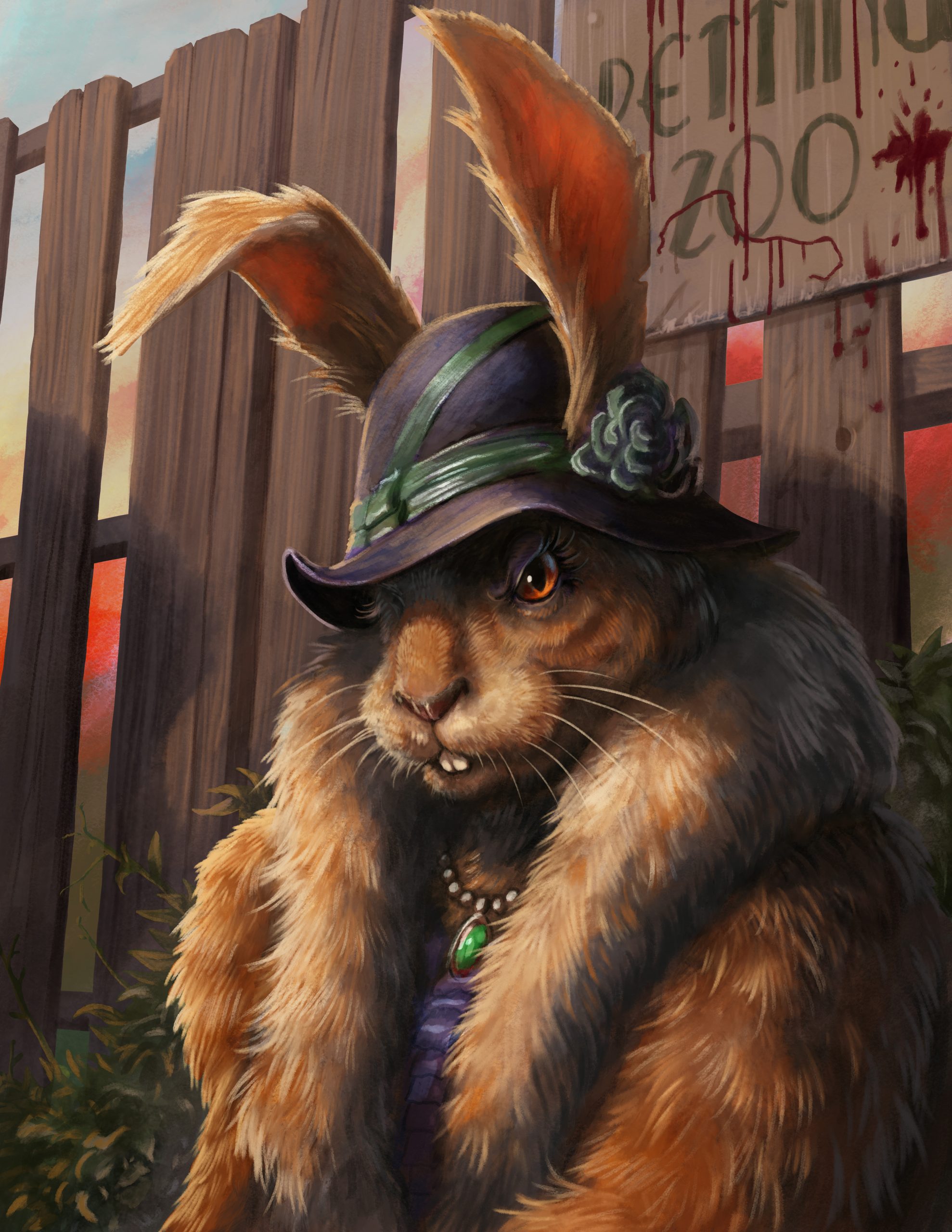
Zoo Mafia RPG
It is true that Minecraft is the most iconic sandbox game ever made; still, there are other sandbox games with a strong appeal for tabletop gamers that deserve a visit.
Terraria
This 2D side-scrolling sandbox game is full of hidden treasures, bosses, crafting, and exploring features. It’s like a mix of a dungeon crawl and building creativity.
Valheim
This is a Norse mythology inspired survival sandbox game. You can construct your house, sail the seas, and fight monsters with your friends.
No Man’s Sky
This game is perfect for sci-fi RPG enthusiasts that love to discover, explore, and build bases in innumerable worlds.
RimWorld
A colony sim that’s really good at turning game mechanics into deeply emotional stories. It might be considered a campaign ruled by chaos.
The Sims
In a very different way, it is still one of the greatest instances of player-driven narratives and social experiments.
Why Nerd Culture Naturally Overlaps
Generally speaking, hobbyists from the geek realm do not confine their activities to just one single hobby. A person working on the paint job of miniatures, for example, may be simultaneously involved in building castles in Minecraft. The one who is creating detailed background stories in their roleplaying characters’ lives might be planning settlement designs in the game of Valheim as well. Meanwhile, the game master who cannot stop thinking of maps may end up spending the entire weekends at their landscapes terraforming. These are just a few examples of the numerous geek hobbies that definitely overlap.
These activities all fulfill the same primal desire: to make something uniquely yours and then share it with others. It may be a campaign world, a server town, a custom dungeon, or a digital fortress; the joy largely stems from the process of bringing the mind’s eye into the physical world.
Conclusion
Creative sandbox games feel like a natural hobby for tabletop gamers, after all, they continue to enjoy the same values: freedom, collaboration, creativity, and emergent storytelling. They rely on players to create their own fun. They value curiosity more than obedience. They transform mistakes into stories, and simple tools into adventures that people will remember for a long time. Minecraft is the clearest illustration of this link. It provides players with infinite ways to construct their own worlds, narrate collective stories, and partake in collaborative community creativity. But the greater reality is that it does not rely on only one particular game. For those who play tabletop games, sandbox games are definitely not something they do on the side. They are simply a different mode of expressing that same love for imagination which causes people to get together around dice, maps, and character sheets year after year.



No Comments